Most discussions about AI in expert networks focus on what happens after the call.
Better transcripts. Smarter libraries. Synthetic experts trained on proprietary datasets. These are real opportunities, and the race to build them is already underway.
But there's a more immediate problem that almost nobody is talking about directly - and it sits further upstream, before a single word of insight has been captured. It's the sheer human cost of running an expert network at all.
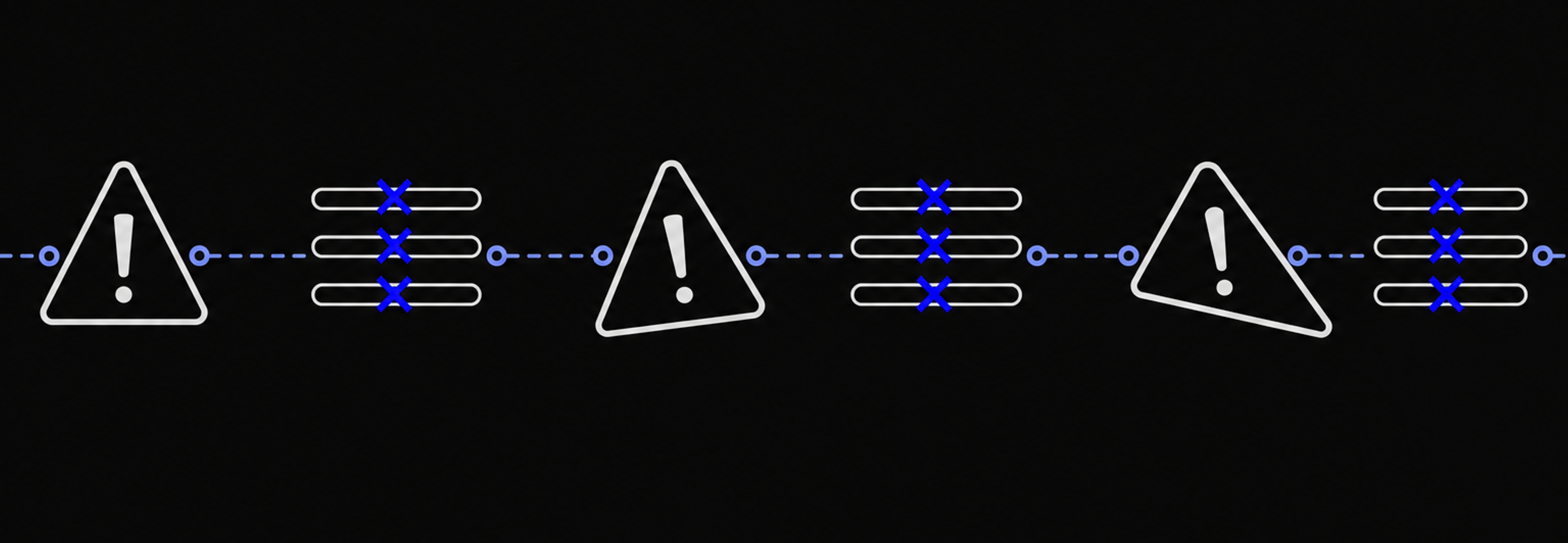
Call it the human tax. It's everywhere, it compounds at every stage of the workflow, and it's the first thing AI moderation actually fixes.
The overhead starts with the client request
Every engagement begins the same way. A client submits a brief. Maybe it's a private equity firm conducting due diligence on an acquisition target. Maybe it's a consultant mapping a new market for a strategic client. Whatever the context, the request lands - and immediately, the clock starts.
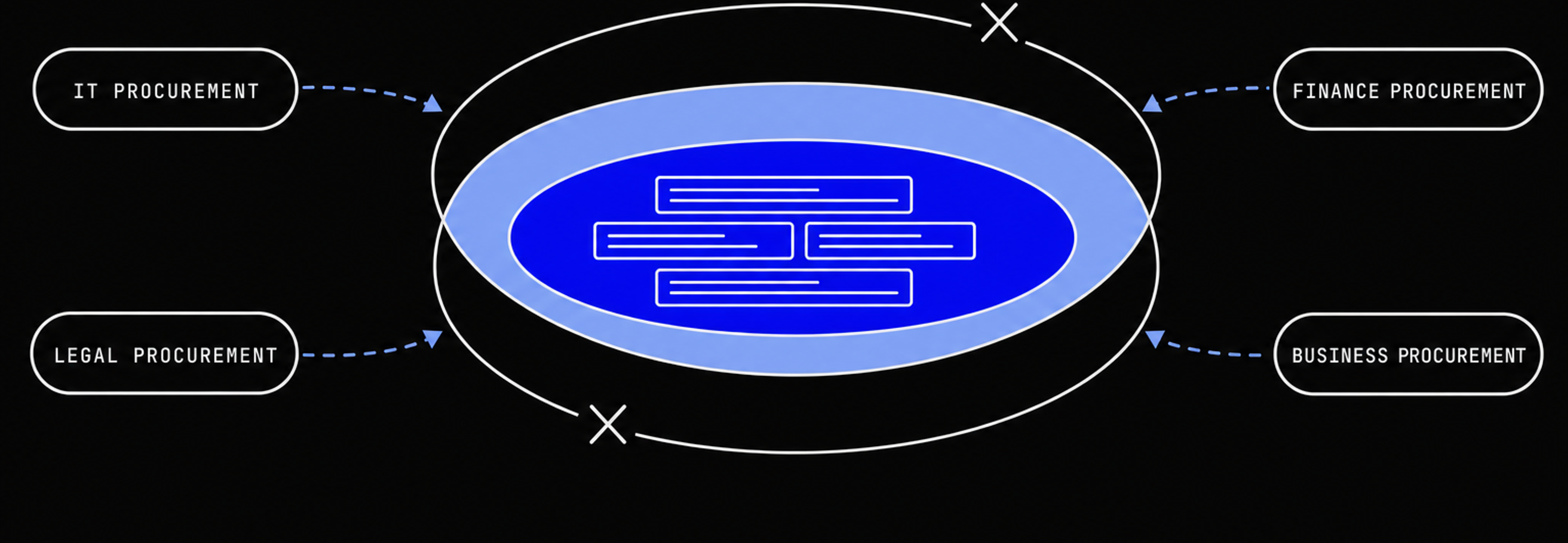
Someone has to find the right expert for that specific topic, at that specific moment. Not a generic industry contact, but a person with direct, recent, relevant experience: a former sales director who was inside the target company eighteen months ago, or a supply chain specialist who was managing procurement through the exact disruption the client is trying to understand.
Someone has to vet that person - checking their credentials, confirming their tenure, assessing whether their experience actually maps to what the client needs. Someone has to reach out, explain the engagement, negotiate their time, and schedule a window that works across potentially incompatible calendars and time zones.
And critically: someone has to make the judgment call that this particular expert is worth putting in front of a paying client at all. That judgment is not a trivial one. It requires understanding both the client's actual need and the expert's actual knowledge, and deciding whether the gap between them is small enough to be worth everyone's time.
This entire process happens fresh for every single client request. It doesn't compound. It doesn't amortise. It doesn't get easier the tenth time than it did the first. It scales linearly with demand - which is exactly why it becomes the throttle on growth. The more successful the network, the more requests it receives, the more human hours get consumed before a single insight is delivered.
AI changes this calculus fundamentally. Automated profiling, relevance scoring against client briefs, credential verification, and initial outreach can happen in seconds rather than days. The human reviewer shifts from being the primary mechanism for intake to a final check on genuinely ambiguous cases. The expert pool grows faster, the matching improves, and the time between client request and confirmed engagement compresses dramatically.
The scheduling constraint nobody wants to admit
Even after the right expert has been identified and confirmed, there is another tax waiting: coordination.
A live expert call requires both parties to be available at the same time. In practice, this means calendar invites, time zone arithmetic, rescheduling when a client meeting runs long, and the occasional no-show that wastes everyone's preparation. For domestic engagements with amenable time zones, this friction is manageable. For international expertise - the former government official in Southeast Asia, the logistics executive in the Gulf, the regulatory specialist in Eastern Europe - the coordination overhead is not a minor inconvenience. It is a structural constraint on how quickly, and how reliably, insight can actually be delivered.
Networks increasingly competing on international coverage are discovering that the value of their expert pool and their ability to access it on a client's timeline are two very different things. Having the right expert means nothing if getting them on a call takes three weeks of back-and-forth.
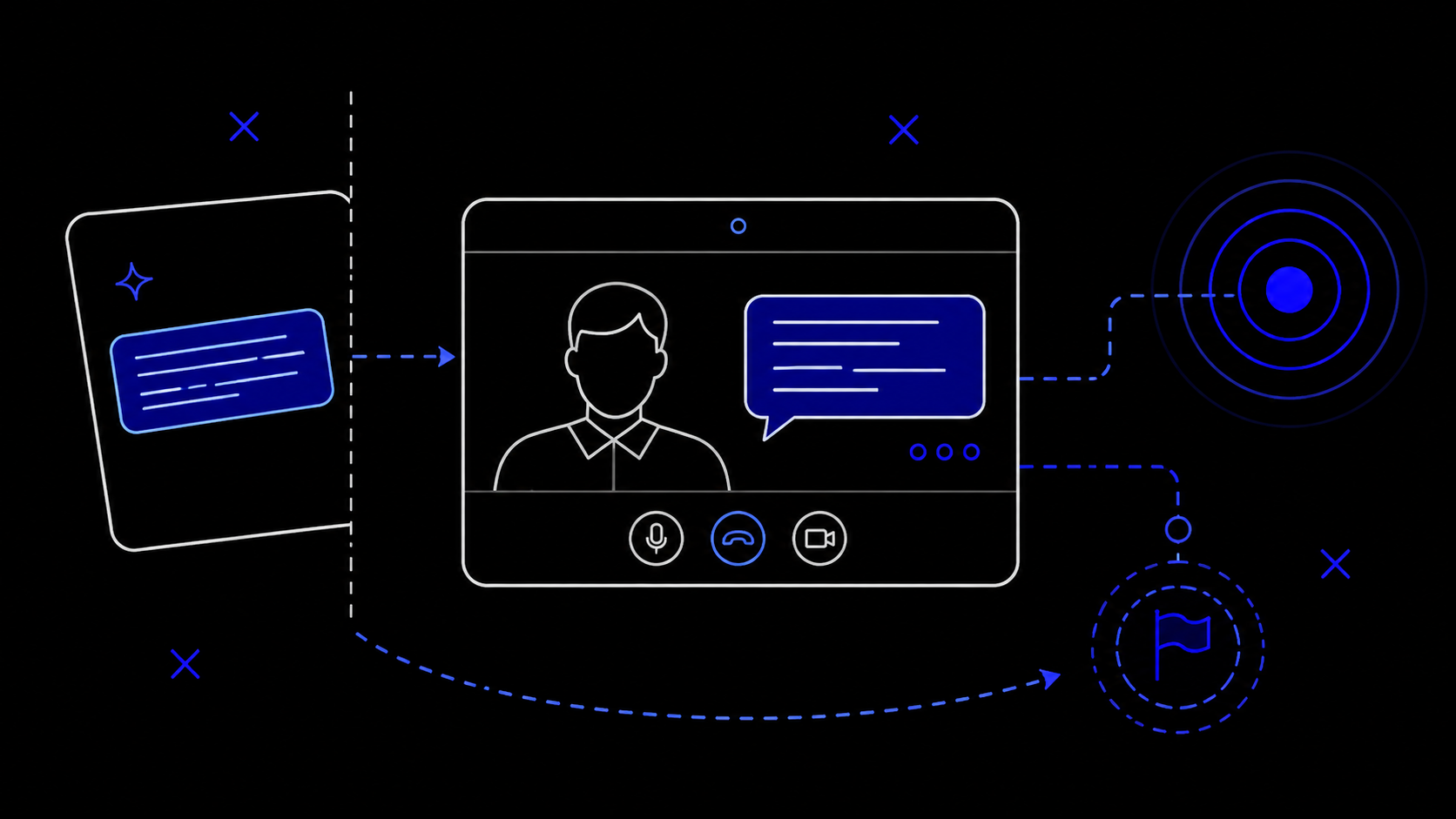
An AI moderator decouples the expert from the client's timeline entirely. The expert engages on their schedule. The insight reaches the client on theirs. The synchronisation requirement that has always been the hidden cost of live engagement - two people in different time zones free at exactly the same moment - dissolves. For networks serious about international coverage, this is not a marginal efficiency gain. It is a structural unlock.
The quality problem is upstream
Here is the constraint that should concern every expert network building toward a transcript library, a synthetic expert capability, or any AI-powered product downstream.
The quality of everything that follows - every library entry, every RAG retrieval, every model trained on proprietary conversation data - is a direct function of the quality of the conversation that produced it. A poorly moderated call produces a poor transcript. A poor transcript produces a corrupted library entry. A corrupted library entry degrades the model trained on it. The garbage-in problem does not begin at the post-processing stage. It begins the moment a moderator fails to follow up on something the expert said, or lets the conversation drift away from what the client actually needed to know.
This is where AI moderation earns its keep - not as a cost-cutting measure, but as a quality intervention at the source.
A well-designed AI moderator does not simply read from a prepared question list. It listens to what the expert is actually saying and calibrates. It notices when an expert mentions a vendor relationship that was not in their profile and follows that thread. It recognises when someone is answering a related but subtly different question and redirects. It tracks terminology in real time - understanding that the language around a given technology or market segment evolves, and that what a term meant two years ago is not necessarily what it means today.
The output of that conversation is structurally richer and more consistent than what a time-pressured associate can reliably produce across hundreds of engagements per week. Every call becomes a cleaner, more complete building block for the library being assembled behind it.
The data flywheel and why it only spins one way
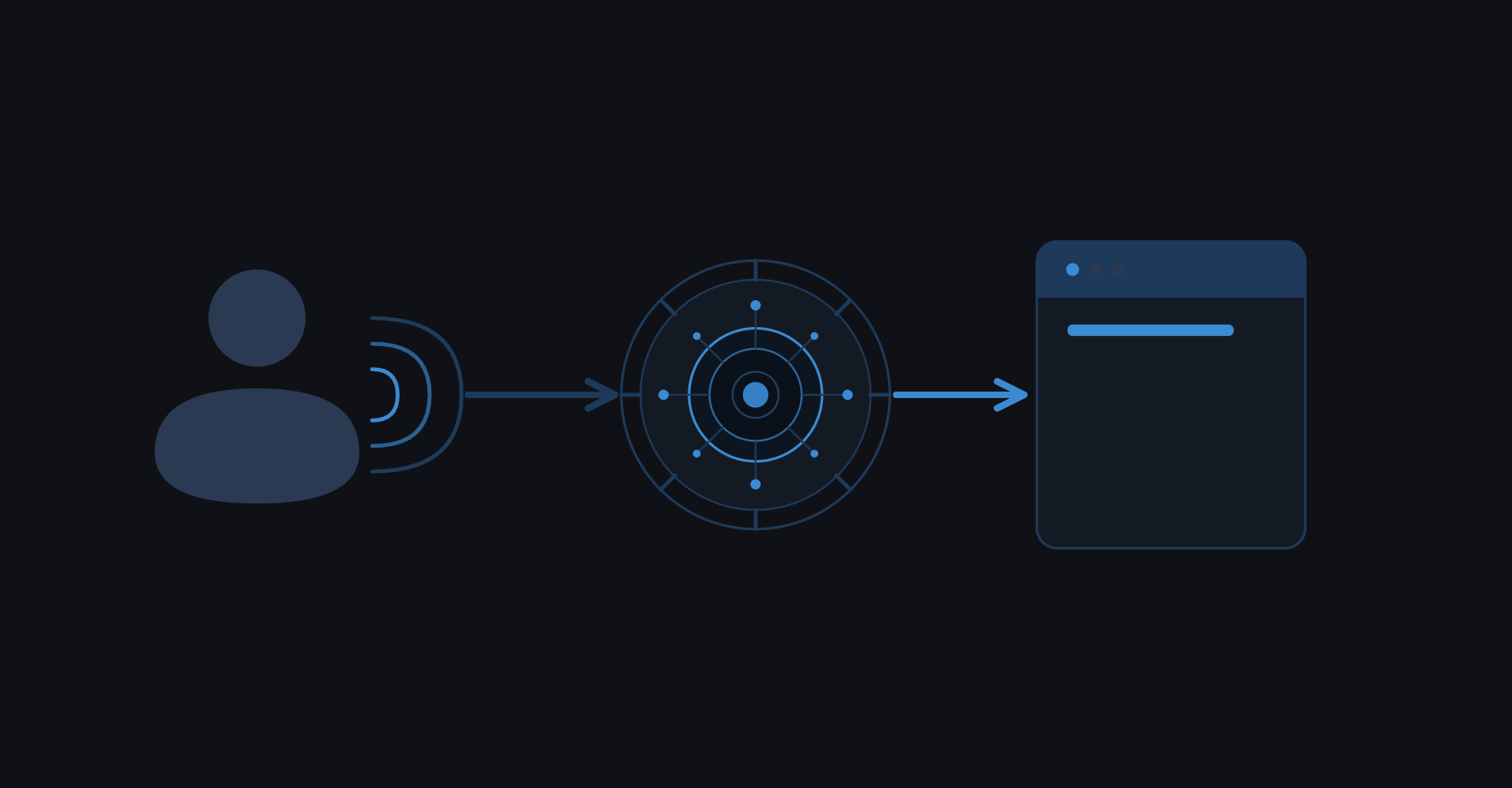
Every AI-moderated call, properly transcribed and structured, becomes training data for a better AI moderator. A better moderator produces a richer conversation. A richer conversation produces a higher-fidelity transcript. A higher-fidelity transcript trains a smarter next moderator. The loop compounds.
But the flywheel only spins in one direction if the data going into it is clean. Transcripts with misattributed speakers, hallucinated technical terminology, or corrupted entity names do not improve the system over time - they degrade it. Subtly, persistently, and in ways that are hard to detect until the downstream errors become impossible to ignore.
This is why transcript quality is not an operational detail. It is the strategic input that determines whether a network's AI capabilities compound or plateau. The networks treating their transcript infrastructure as a cost centre to be minimised are making a decision whose consequences will only become visible when it is expensive to reverse. Those investing in clean, structured, human-verified data at the point of capture are building the raw material that everything else depends on.
Every transcript is either an asset or a liability. The choice of which is made at the moment of production, not in post-processing.
Micro-engagements and the format shift
One dimension of the AI moderation opportunity that remains underappreciated is format.
The traditional expert call runs 45 to 60 minutes. It is expensive to arrange, resource-intensive to moderate, and requires meaningful post-processing before it is useful. The unit economics are defensible at scale, but the format is inherently heavy - and it excludes a wide range of legitimate client needs where a specific, targeted answer is what is actually required, not a comprehensive session.
AI moderation makes a different format viable: the micro-engagement. A five or ten-minute structured conversation, triggered by a precise question, conducted on the expert's schedule, processed and integrated within hours. Recurring. Scalable. Cheap enough to run against a far larger portion of a network's expert base than could ever be mobilised for live calls.
For ongoing sector monitoring, rapid verification of a specific data point, or tracking sentiment shifts around a particular company over time, this format is not a compromise. In many cases it produces better insight than a long call would. The expert is less fatigued. The conversation is more focused. The output is more immediately usable. The network running hundreds of these per week - cleanly transcribed, properly structured, integrated into a live knowledge base - accumulates an informational advantage that no amount of traditional call capacity can replicate.
Where human judgment actually belongs
Every network building toward AI moderation confronts the same internal tension. Compliance wants oversight. Engineering wants automation. Clients - increasingly sophisticated about AI systems - ask about human-in-the-loop processes as a matter of due diligence.
The resolution is not to choose a side. It is to be precise about where human judgment creates value that AI currently cannot substitute, and to concentrate it there.
Human reviewers catch the errors that matter most and are hardest to catch automatically: a concept subtly misused because the model has not yet encountered its most recent evolution; a factual claim that sounds plausible but is wrong in a way that will propagate across dozens of downstream analysis steps; a speaker attribution that got flipped because two voices sounded similar on a low-quality line. These corrections are high-value and relatively infrequent. A small team of expert reviewers, focused on exactly this kind of catch, creates disproportionate downstream impact.
What that team should not be doing is transcribing and formatting raw audio at volume, screening every inbound expert profile, or scheduling calls across time zones. That is where the bottleneck forms. That is where cost scales with demand in a way that caps growth. That is the overhead AI eliminates - not by removing human judgment, but by redirecting it toward the work that only humans can reliably do.
The industry reset that's already beginning
The expert networks that define the next decade will not be the ones with the most associates making outreach calls. They will be the ones that systematically eliminated the human tax at every stage of their workflow - without sacrificing the quality that justifies what clients pay.
AI moderation is the mechanism. Not as a feature layered onto an existing product, but as infrastructure that changes the unit economics of the entire operation. It determines whether a network can grow its expert pool without growing its headcount proportionally. Whether it can serve international clients without being held hostage to scheduling logistics. Whether the transcript library it is building today is a compounding strategic asset or a slowly degrading archive.
The human tax is real. It sits at the intake stage, in the scheduling friction, in the moderation quality, and in the post-processing overhead. It compounds at every step. And the networks that eliminate it first - not by cutting corners, but by replacing manual overhead with AI systems that genuinely improve with every engagement they handle - are building a structural advantage that will be very difficult to compete with once it matures.
The flywheel either starts now or it doesn't start at all.