In investment management, firms have spent decades and fortunes optimizing the analysis of quantitative data. Every numerical input, from SEC filings to market data streams, is parsed with extreme efficiency. Yet, a vast and valuable dataset remains largely untapped: the spoken word.
Earnings calls, investor presentations, expert network interviews, and internal strategy sessions contain critical, forward-looking indicators. This qualitative data holds clues to corporate strategy, competitive dynamics, and management sentiment that rarely appear in structured financial statements. The inability to systematically capture and analyze this information at scale has created a strategic blind spot for many firms.
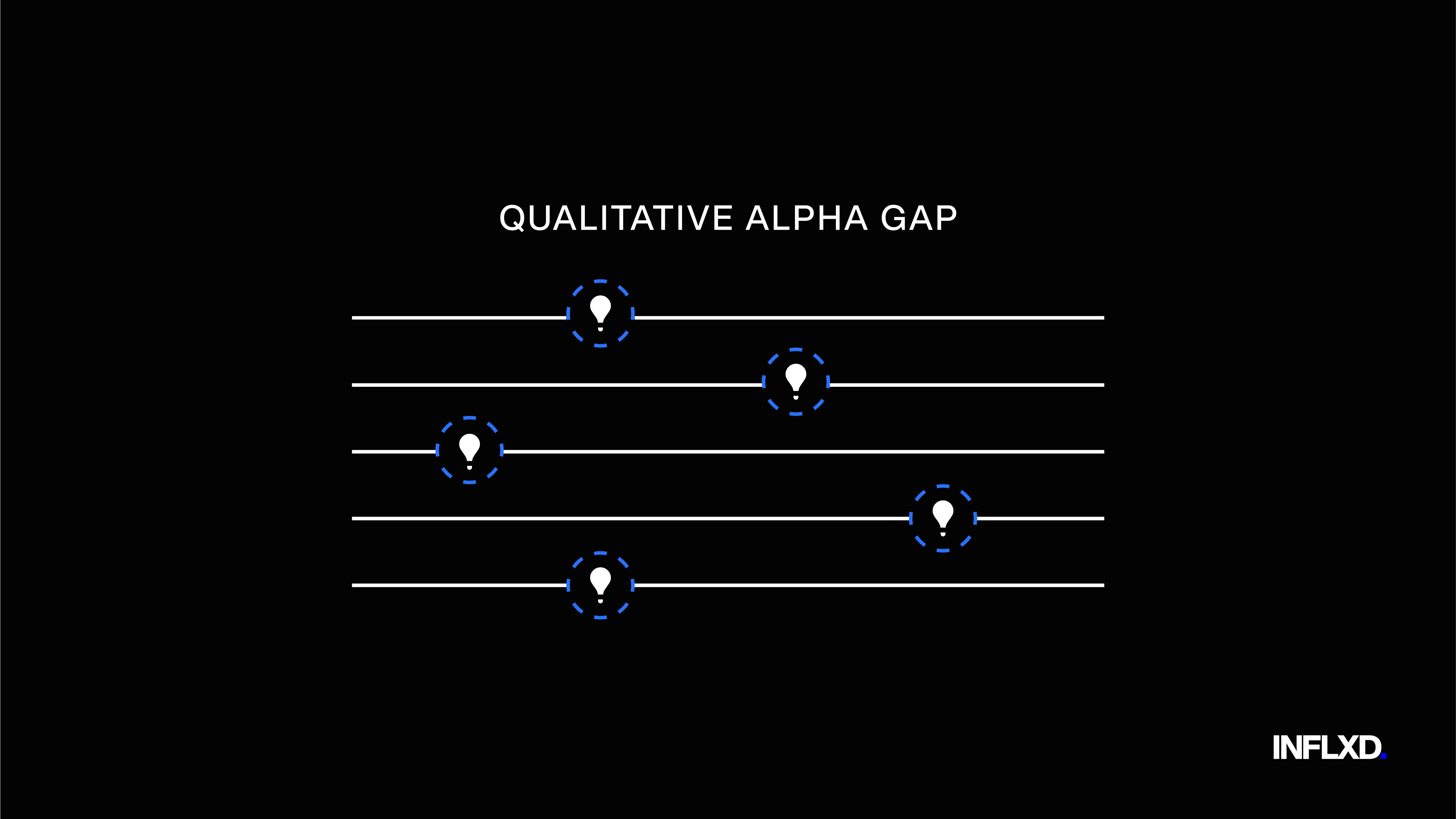
We call this The Qualitative Alpha Gap: the measurable advantage lost when investment teams cannot efficiently process and quantify unstructured audio and video data. Closing this gap is the next frontier in generating alpha, separating firms that merely listen from those that can derive predictive insights.
What Is the Qualitative Alpha Gap?
The gap exists because spoken-word data has historically been treated as anecdotal. An analyst might catch a revealing turn of phrase on an earnings call, but that insight remains isolated. It is not systematically compared against thousands of other transcripts, tracked over time, or integrated into quantitative models. This leaves immense value on the table.
The challenge is one of volume and structure. The U.S. transcription market alone was valued at USD 30.42 billion in 2024 and is projected to reach USD 41.93 billion by 2030, driven by the explosive growth of audio and video content across all industries, including finance.¹ For research teams, this presents both an opportunity and a threat. Without a modern system to process it, this deluge of information becomes noise, creating risk rather than opportunity.
The Hidden Costs of an Outdated Research Model
Firms still relying on manual methods—tasking highly-paid analysts with note-taking or using administrative staff for transcription—face costs that go far beyond salaries. These legacy workflows introduce three significant strategic drags that widen the Qualitative Alpha Gap.
The Speed Disadvantage: In markets where an edge can be measured in hours, manual processes create an unacceptable lag. While one team is waiting for a transcript, a competitor with an automated workflow is already analyzing the data, identifying sentiment shifts, and acting on the information.
The Focus Drain: The core function of a research analyst is analysis, not administration. Every hour spent on the low-value task of data processing is an hour not spent on interpretation and strategy. Based on their experience, firms that have adopted AI-driven transcription report significant reductions in administrative workload, freeing analysts to focus on generating unique insights.
The Scalability Barrier: The volume of relevant financial audio is simply too large for manual methods to handle effectively. Market-leading research platforms now process tens of thousands of hours of financial audio annually. Attempting to match this scale with a manual approach would require a proportional, and unsustainable, increase in operational overhead.
As the financial sector accelerates its technological shift—with recent studies indicating that over 75% of financial services firms have now launched AI initiatives—clinging to manual processes is no longer just inefficient; it is a competitive liability.²
A Modern Framework: The Three Tiers of Research Intelligence
Closing the Qualitative Alpha Gap requires more than just buying a piece of software. It demands a new operating model for research. Our perspective is that this is best achieved by building a system in three distinct, compounding tiers.
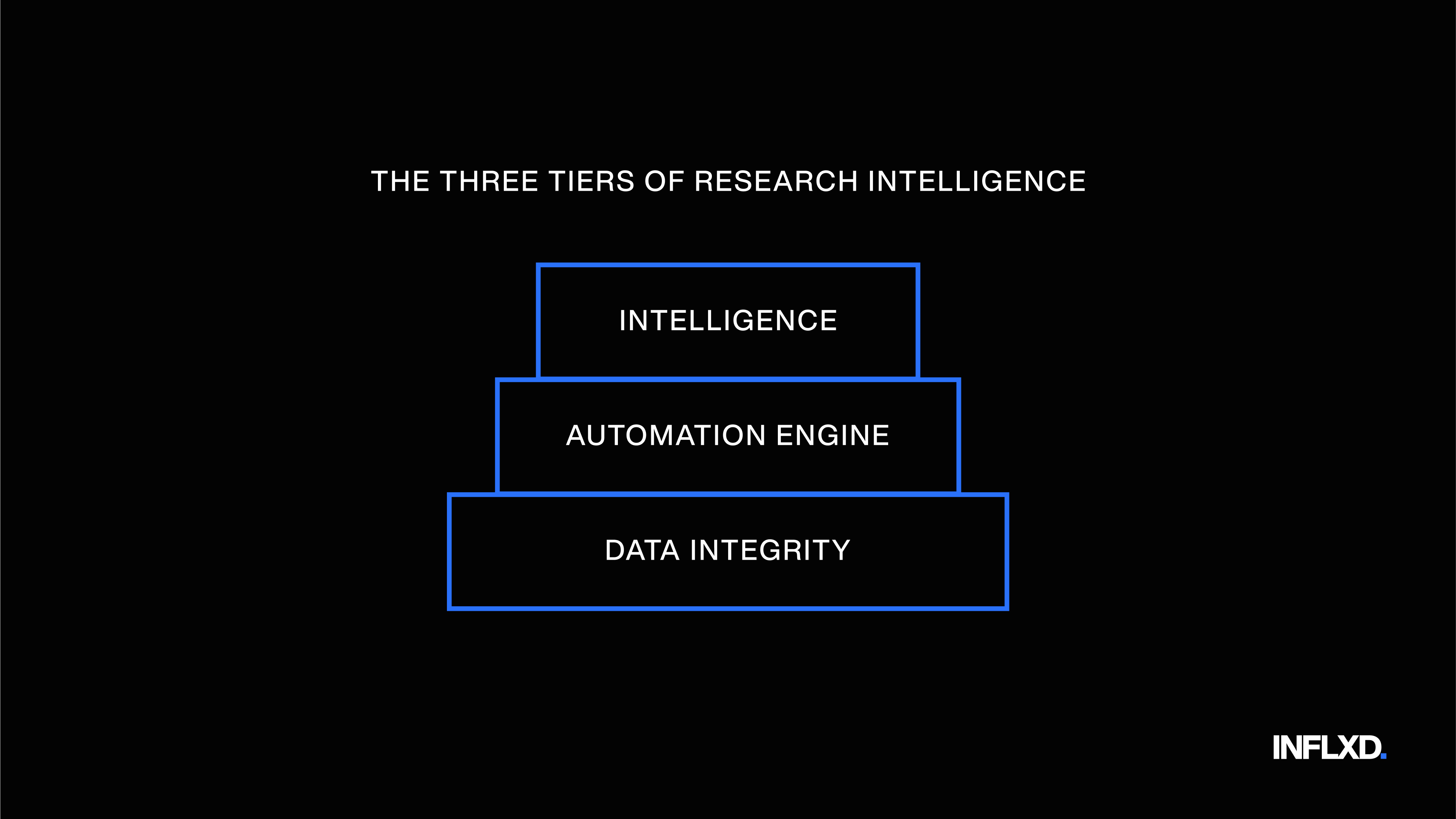
Tier 1: The Data Integrity Foundation
Before any advanced analysis can occur, you must have a reliable, consistent, and accurate data pipeline. The most common mistake is rushing to complex analytics using flawed or inconsistent inputs.
- Objective: To create a single source of truth for all transcribed data.
- Key Actions: Consolidate all transcription activities with a single, high-accuracy provider to ensure consistency in format, terminology, and quality. Establish a baseline for accuracy (our view is that >99% is necessary for critical financial content) and turnaround time.
Tier 2: The Automation Engine
With a trustworthy data foundation in place, the next step is to automate the flow of that information into your team's daily workflow. This tier focuses on turning raw text into structured, machine-readable signals.
- Objective: To automatically enrich transcripts and integrate them with existing research tools.
- Key Actions: Deploy Natural Language Processing (NLP) to automatically identify and tag key entities, topics, and sentiment scores. Build API integrations to feed this structured data directly into financial models, eliminating manual entry and reducing the risk of error. Create automated alerts for keyword mentions or significant sentiment shifts in key accounts.
Tier 3: The Intelligence Layer
This is the highest level, where the system moves beyond processing data to generating true, proprietary intelligence. It leverages the automated foundation to uncover patterns and insights that are invisible at the individual document level.
- Objective: To generate non-obvious insights and predictive signals from the entire dataset.
- Key Actions: Conduct cross-transcript analysis to identify emerging sector-wide trends, risks, or competitive threats. Perform comparative analysis by benchmarking management language and strategic priorities against peers over time. Create feedback loops where analysts can validate or refine AI-driven insights, continuously improving the system's accuracy.
Choosing the Right Engine for Your System
The success of this three-tiered framework depends entirely on the quality of its engine: the transcription service. Selecting a partner is a critical decision that involves balancing accuracy, speed, and domain expertise.
Our perspective is that for serious investment research, a hybrid model is the only viable solution. It provides the speed and scale of AI, but with the critical layer of human verification needed to ensure the >99% accuracy required for confident decision-making. This is the engine that can reliably power all three tiers of the research intelligence framework.
From Overload to Advantage
The convergence of AI and human expertise has created a new imperative for investment research leaders. The challenge is no longer simply managing information overload; it is building a system to extract alpha from it.
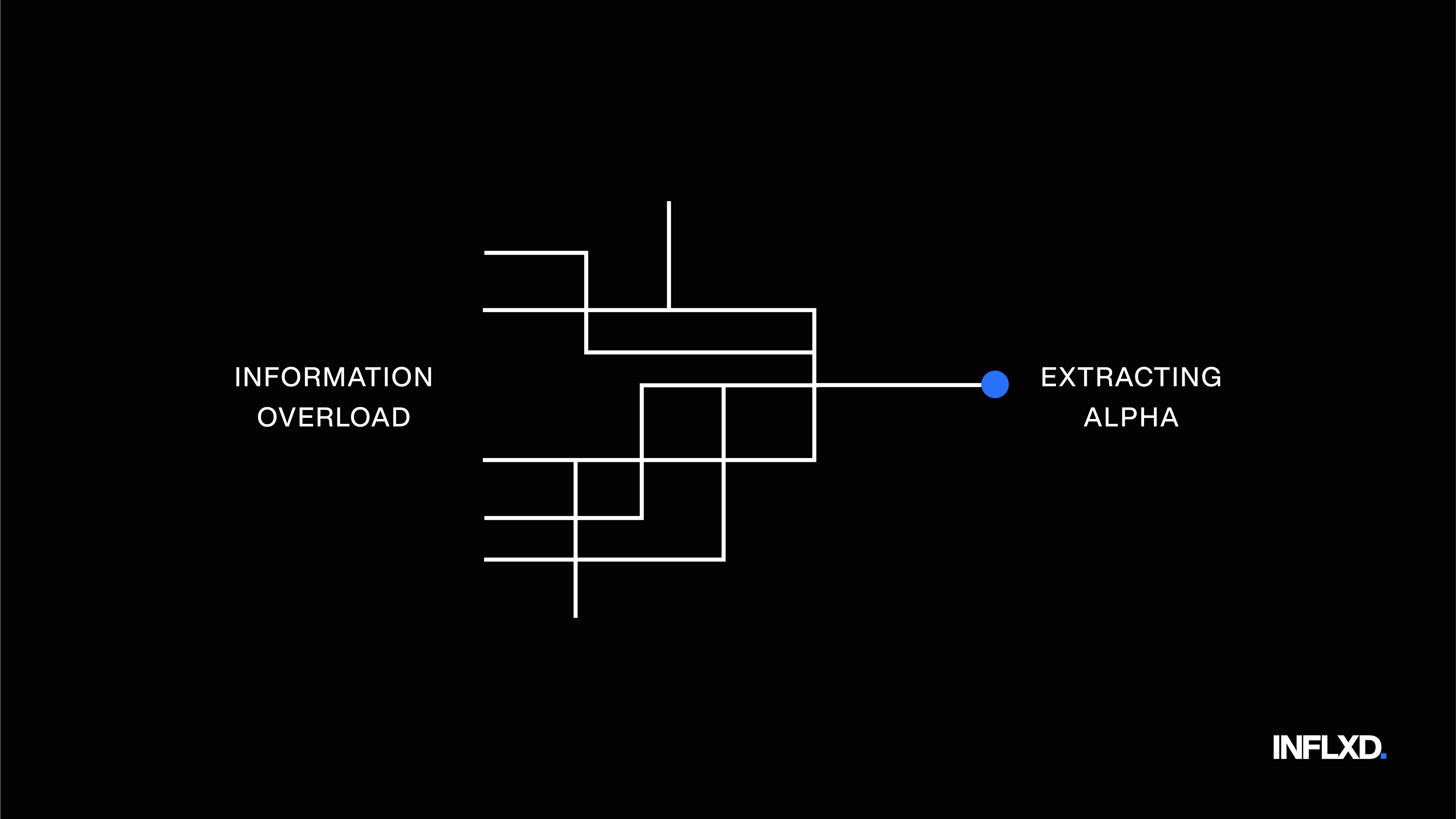
Firms that successfully build this capability will close the Qualitative Alpha Gap, transforming a once-anecdotal data source into a powerful engine for generating predictive insights. This transformation requires a strategic partner who understands not just technology, but the intricate demands of financial analysis.
INFLXD specializes in designing and implementing these bespoke intelligence systems. We work with investment firms to build the foundational data pipelines, automation engines, and advanced analytical layers required to turn unstructured audio and video into a source of durable competitive advantage.
References
- [1]Grand View Research. (2025). U.S. Transcription Market Size, Share & Trends Analysis Report grandviewresearch.com/industry-analysis/us-transcription-market
- [2]McKinsey & Company. (2025). The State of AI: How Organizations Are Rewiring to Capture Value mckinsey.com/capabilities/quantumblack/our-insights/the-state-of-ai